Cracked or Fractured Pipes
Hairline fractures allow ground moisture and dirt into the pipe while letting wastewater escape. Left unchecked, fractures expand and lead to complete pipe wall collapse.
Dealing with recurring backups, multiple slow drains, foul odors, or water pooling in your yard? Connect 24/7 with trusted, independent sewer specialists serving homeowners across Lake Stevens and ZIP code 98258.
Speak directly with an independent provider about camera inspections, trenchless relining, localized spot repairs, and pricing.
Underground sewer damage often presents subtle warning signs before complete failure.
Quick Homeowner Triage
Select your primary symptom below to understand the potential severity, likely cause, and immediate recommended steps.
When wastewater backs up into ground-floor bathtubs, showers, or floor drains when you flush a toilet or run the washing machine, the blockage is in your main underground sewer lateral—not an individual fixture trap.
If only one fixture in the house is draining slowly while all other sinks and toilets function normally, the issue is almost always localized to that fixture's P-trap, pop-up assembly, or secondary branch line.
A "rotten egg" sewer gas smell means wastewater gases are penetrating your living space. This can indicate a dried-out trap, a compromised toilet wax ring, a cracked vent stack, or a broken underground sewer pipe beneath your foundation.
A cracked or disconnected underground pipe allows nutrient-rich wastewater to saturate the lawn above it. This leads to unusually dark green grass patches, foul-smelling puddles, or soil sinkholes along the lateral path to the street.
Diagnosing Underlying Causes
From older mid-century homes near downtown Lake Stevens to newer hillside developments, underground sewer systems face distinct Pacific Northwest soil and environmental challenges.
Hairline fractures allow ground moisture and dirt into the pipe while letting wastewater escape. Left unchecked, fractures expand and lead to complete pipe wall collapse.
Mature Douglas firs, cedars, and maples in Snohomish County penetrate clay and cast iron pipe joints seeking moisture, creating dense root balls that trap debris and cause total blockages.
Glacial till and shifting soils cause sections of the sewer lateral to sink. Standing water pools in the low spot (belly), collecting toilet paper and solids until flow is choked off.
Older cast iron pipes channel on the bottom and develop tuberculation (calcified rust scale) that catches paper. Clay pipes become brittle and porous after decades in moist soil.
Ground settling around hillside properties causes connecting joints to slip out of alignment. The resulting lip snags toilet paper and solids, causing repeat clogs every few months.
When the pipe wall caves in completely, wastewater is completely blocked and soil floods the pipe. Requires immediate excavation or mechanical pipe bursting to restore sanitation.
Predictable, Clear Process
Modern plumbing diagnostics eliminate guesswork. Here is the straightforward process when you connect with a participating specialist.
Describe the symptoms you are seeing (backups, odors, soggy ground). The provider determines urgency and schedules a diagnostic technician visit with full equipment.
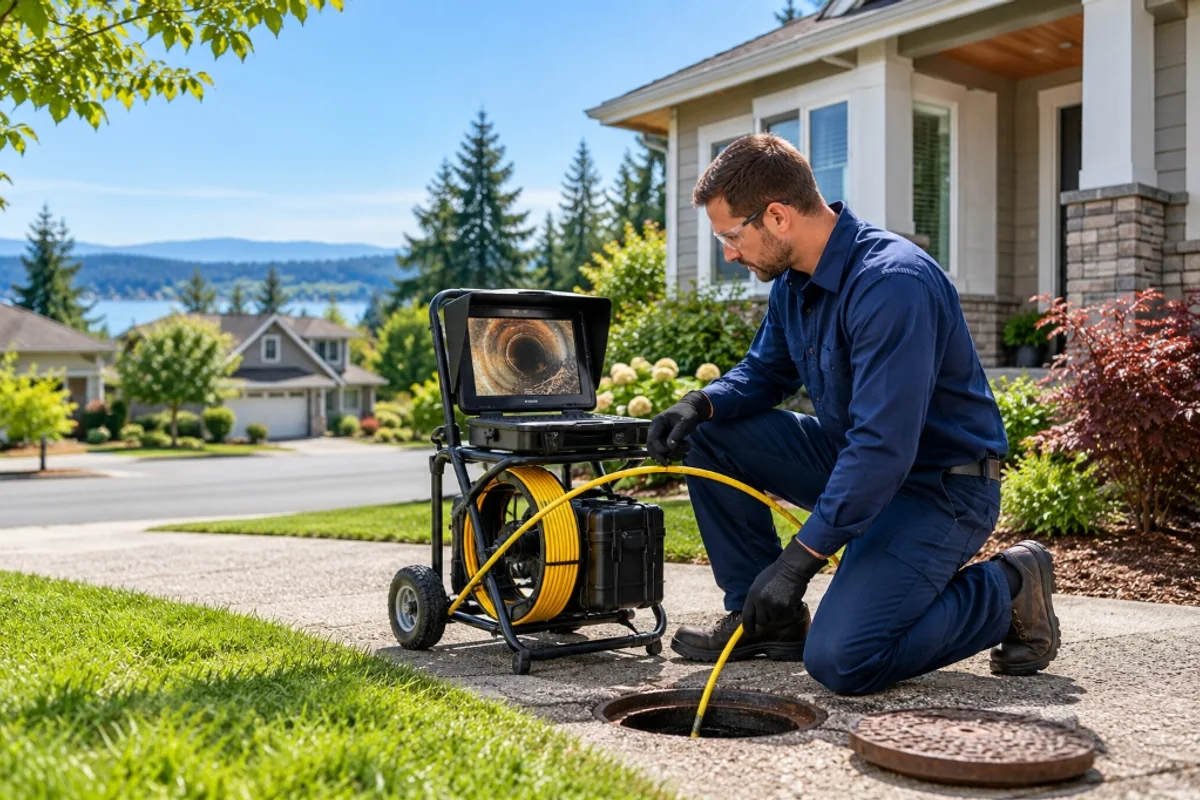
A high-definition optic probe is inserted through your exterior cleanout. You see real-time footage of root infiltration, cracks, depth, and exact distance to the city main.
The contractor reviews your options—such as hydro-jetting, trenchless epoxy relining, pipe bursting, or targeted spot excavation—with upfront written pricing.
High-definition optical cameras pinpoint the exact depth, footage, and condition of your sewer lateral so you never pay for unnecessary digging.
Diagnostic Precision
Before authorizing any major plumbing or excavation work, demand visual proof. A high-resolution camera reveals whether your problem is an isolated blockage or true structural damage.
Objective Comparison
Not every broken sewer line requires replacing the entire underground run. Review how providers decide between targeted spot repair and full lateral replacement.
When inspection reveals that 80%+ of the sewer line is structurally intact and the defect is isolated to a single joint or crack.
When older cast iron, clay, or concrete pipes have reached the end of their operational lifespan and exhibit continuous structural failure.
A participating technician will walk you through the camera video so you can make an informed, pressure-free decision for your property.
Modern No-Dig Methods
Traditional sewer replacement used to mean digging a massive, 6-foot-deep trench across your lawn, driveway, and landscaping. Today, modern trenchless technology allows technicians to rehabilitate or replace your underground pipes with minimal digging.
Whether your property is best suited for epoxy pipe lining (CIPP) or hydraulic pipe bursting depends on pipe diameter, current structural stability, and pitch.
Trenchless CIPP relining feeds an epoxy-saturated sleeve inside your broken pipe, curing it solid to create a brand-new seamless pipe without excavating your lawn.
An epoxy-resin-saturated sleeve is inserted into your old pipe and inflated. It cures into a rock-hard, seamless "pipe within a pipe" with zero digging.
A powerful hydraulic bursting head fractures your old, damaged pipe outward while pulling a new, seamless high-density polyethylene (HDPE) pipe into place.
If a section has fully collapsed or lost its downward pitch (belly), small targeted excavation pits are dug only where necessary, minimizing ground disturbance.
Local Snohomish County Knowledge
The terrain around Lake Stevens is defined by dense glacial till soils, high seasonal water tables, and sprawling evergreen tree root systems. During rainy Puget Sound winters, soil saturation shifts underground pipes, exacerbating minor cracks into major blockages.
Whether your property is located in the historic downtown area, near Cavalero Hill, Frontier Heights, or along Highway 92 toward Granite Falls, participating contractors understand local Snohomish County plumbing codes and utility tie-ins.
Residential sewer services focus on Lake Stevens homeowners connecting to municipal sewer districts or maintaining private lateral connections up to the property line.
📍 1115 Frontier Cir E, Lake Stevens, WA 98258, USA
Homeowner Action Checklist
Follow this proven 6-step checklist to avoid costly secondary water damage to floors, drywall, and foundations.
Frequently Asked Questions
Answers to the most common questions Lake Stevens homeowners ask about sewer problems, camera scans, costs, and trenchless solutions.
Possible warning signs include multiple drains backing up simultaneously, gurgling sounds from toilets when running a sink, persistent sewage odors inside or outside, sewage backing up into lowest-level bathtubs or showers, and unusual wet or sunken areas in the lawn. A diagnostic camera inspection can pinpoint the exact cause.
No. Backups are often caused by localized clogs, grease buildup, or tree root blockages that can be cleared with professional hydro-jetting or mechanical snaking. However, recurring backups often indicate a structural defect, crack, or offset joint in the underground pipe.
The Pacific Northwest has dense evergreen and deciduous vegetation (such as Douglas firs, bigleaf maples, and alder trees). Roots seek out moisture and nutrients, entering microscopic seams and hairline cracks in older clay, concrete, or cast iron pipes and rapidly expanding inside the line.
Not always. If damage is isolated to a single 5-to-10 foot section while the rest of the line is structurally sound, a localized spot repair or patch is often feasible. Full replacement is typically reserved for lines with multiple fractures, severe pipe bellies, or widespread corrosion.
Trenchless sewer repair (such as CIPP pipe lining or pipe bursting) restores or replaces damaged underground sewer lines with minimal excavation. Instead of tearing up your lawn, driveway, or patio, technicians insert an epoxy liner or pull a new seamless HDPE pipe through small access pits.
A trained technician feeds a high-definition, self-leveling fiber-optic camera through your sewer cleanout. The camera transmits real-time video to a monitor, recording pipe condition, depth, exact footage of clogs or cracks, and pitch angle to determine the right repair approach.
Costs vary widely based on pipe depth, location (under lawn vs. driveway or street), whether trenchless lining or open excavation is required, and the total footage needing repair. A licensed provider can perform an on-site evaluation to provide an exact, itemized estimate.
We provide educational resources and a free 24/7 phone connection service helping Lake Stevens residents connect with licensed, independent local sewer and drainage contractors. The participating provider provides the diagnosis, estimate, scheduling, and warranty.
Yes. The network focuses specifically on homeowners in Lake Stevens (ZIP 98258), including Frontier Heights, Cavalero Hill, West Lake Stevens, North Lake Stevens, and adjacent Snohomish County communities.
Yes. Phone lines are active 24 hours a day, 7 days a week to connect you with participating contractors who offer emergency dispatch and rapid diagnostic response.
Immediately stop running all water in the house (no showers, sinks, dishwasher, or washing machine). Do not flush any toilets. Avoid using chemical drain cleaners, as they cannot clear a main-line blockage and create caustic splash hazards. Then call a professional right away.
Coverage depends on your specific insurance policy and the cause of damage. Standard homeowner policies frequently exclude subterranean sewer lines unless you have an optional "Water and Sewer Line Backup" or "Service Line Coverage" endorsement. Your contractor can provide video evidence for claims.
Lake Stevens, Washington · 24/7 Available
Don't let a backed-up or broken sewer line damage your home. Call now to speak with a participating independent sewer specialist serving ZIP code 98258.
Pricing, availability, and scheduling are determined directly by participating independent contractors.